


 81 / 168

[
] 81
Floods
Flood is the most prevalent serious natural disas-
ter phenomenon in many Southeast Asian countries,
including Thailand, Cambodia, Vietnam, Indonesia and
Malaysia. Many major cities and settlements located
along major rivers or deltas are flood areas, including
Kuala Lumpur, Bangkok, Rangoon, Phnom Penh and
Hanoi.
Floods in Thailand and Cambodia are among the
worst in Southeast Asia, affecting millions of people.
In Thailand, floods in 1995, 1996 and 2002 affected
4.2 million, five million and 3.3 million people respec-
tively. Meanwhile, in Cambodia the floods in 2000,
2001, and 2002 affected 3.4million, 1.7 million and 1.5
million respectively. Taking Malaysia as an example,
the monsoon floods are less life threatening but cause
significant monetary loss to agricultural land and infra-
structure. There were particularly heavy losses during
major statewide floods in the Northern and Southern
Peninsulas of Malaysia in 2003, 2006 and 2011.
Storm surge, typhoon and drought
Storm surge and typhoon occur in abnormal weather
conditions, with storms also triggering landslides and
floods. Droughts following prolonged lack of rain cause
the land to dry up, which in turn leads to famine and
destruction of crops.
Nine out of ten killer disasters in Myanmar have been
related to storm surges, including the Nargis cyclone
in 2008, which was the worst natural disaster ever
recorded in the history of the country, causing at least
138,000 fatalities. In the Philippines, nine typhoon
Volcanic eruption
The subduction zone across the Southeast Asian rim has created
over 200 active volcanoes along the archipelago of Indonesia and
the Philippines. Major eruptions occurred on Krakatau island in
1883 (killing approximately 40,000 people) and Mount Pinatubo
in 1991 (killing 1,335). Krakatau also generated a giant tsunami.
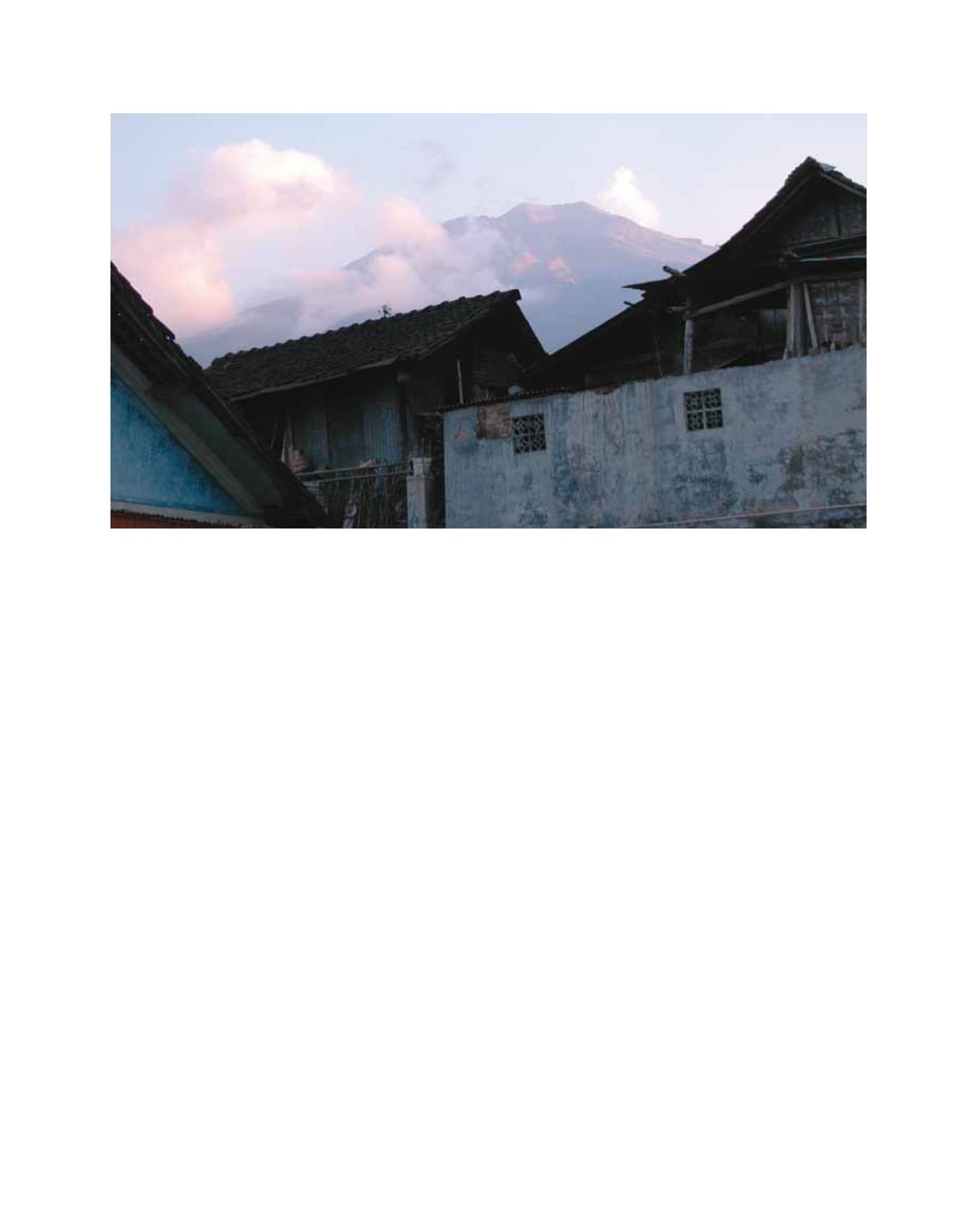
The most recent eruption in Indonesia was Mount Merapi in 2010,
forcing the evacuation of at least 19,000 people and killing 353.
This was the fourth episode following eruptions in 1930, 1994
and 2006.
Landslides
Landslides such as rock fall and debris flow are natural phenomena
that occur in sloping or hilly areas with localized impacts. Even
though landslide events in Southeast Asia are widespread, infor-
mation on these disasters is still poorly recorded. Landslides in
this region vary in size and nature. In Southeast Asia, one of main
issues related to landslides is human-induced landslide, commonly
known as slope failures. These landslides have become more serious
than natural landslides in some countries due to poor slope design,
construction and maintenance.
In Malaysia more than 620 lives were lost due to landslides
between 1900 and 2010. Debris flow in mountainous area was
the major killer in a landslide disaster in 1996 with 66 deaths,
following the Highland Towers collapse in 1993, which killed 48.
Subsequently two disasters took place in 2002 and 2008 on the same
hill. Meanwhile in Indonesia, 498 people died and 249 people were
reported missing in 23 landslide events between 2001 and 2004.
Landslides in Banten (2001) killed 94 people, while in Nias (2001),
50 people were killed, 114 went missing and 325 houses were
damaged. The landslide in Baharok River area killed 151 people
and 100 were reported missing.
Mt. Merapi, the most active volcano in Jawa, erupted in 2010, killing 353 people
Image: SEADPRI