


 83 / 168

[
] 83
Integrating disaster risk reduction in water,
sanitation and hygiene (WASH)
Erik Rottier, Disaster Risk Reduction Coordinator, CARE Nederland
C
ommunities, and the people living in them, depend
upon services, such as energy, transport, education, and
access to markets, for their proper functioning. While
all services are important for society to function, some, like
water, sanitation and hygiene (WASH) and medical services,
are critical to survival and thus need special attention to ensure
continuity, especially after a disaster occurs. The breakdown of
these services could result in secondary disasters.
There are several links between disasters and WASH; disas-
ters can destroy or degrade WASH services at a time society
can ill afford it, resulting in the breakdown of services and/or
contamination of the environment, which may create conditions
that can lead to follow-up, or secondary, disasters. A commu-
nity displaced because of flooding, and living in crowded and
unhygienic conditions, may be at risk of an outbreak of cholera,
louse-borne typhus and other infectious diseases. A disaster that
damages the water supply used for irrigation may result in the
loss of livelihood opportunities in the community, leading to
poor food security. Inadequate WASH services can
also cause conditions that increase the likelihood
of disasters. For example, a community using river
water that is polluted by faecal matter from upstream
communities will be at risk of an outbreak of faecal-
oral infections (such as typhoid fever and cholera).
Stormwater drainage systems that cannot evacuate
the water generated by heavy rains, because of poor
design or blockage with soil or solid waste, may cause
flooding of communities.
It is also essential that new vulnerabilities or hazards
are not introduced or reinforced through existing or
newly built WASH installations.
It is essential to increase the resilience of WASH
systems towards natural hazards and increasingly devel-
opment and relief agencies are recognizing the need for
integrating disaster risk reduction (DRR) activities in
the WASH systems that are being set up.
The kind of measures that can help create more resil-
ient WASH services are often quite straightforward. For
example:
• Reduce exposure by adequately choosing the
location for WASH structures
• Use looped network systems over branched systems
• Use of quality materials that can better withstand
shock
• Set up systems that allow for quick detection and
repair of damage
• Consolidate areas at risk through reforestation
• Ensure there is redundancy built into the system,
covering physical structures, human resources, and
organizational units
• Develop emergency preparedness plans
• Train stakeholders in dealing with the effects of
hazard events/disasters.
Making WASH systems more resilient to natural
hazards will also ensure that development gains are
better preserved.
In May 2009, Cyclone Aila touched India’s south-
eastern coast, affecting almost 6.6 million people across
18 districts. Homes were destroyed, as were standing
crops, fisheries and livestock. Water sources were
contaminated with saline water. Traditionally the popu-
lation was largely dependent on surface water ponds
for its water supply: these ponds were now filled with
2043
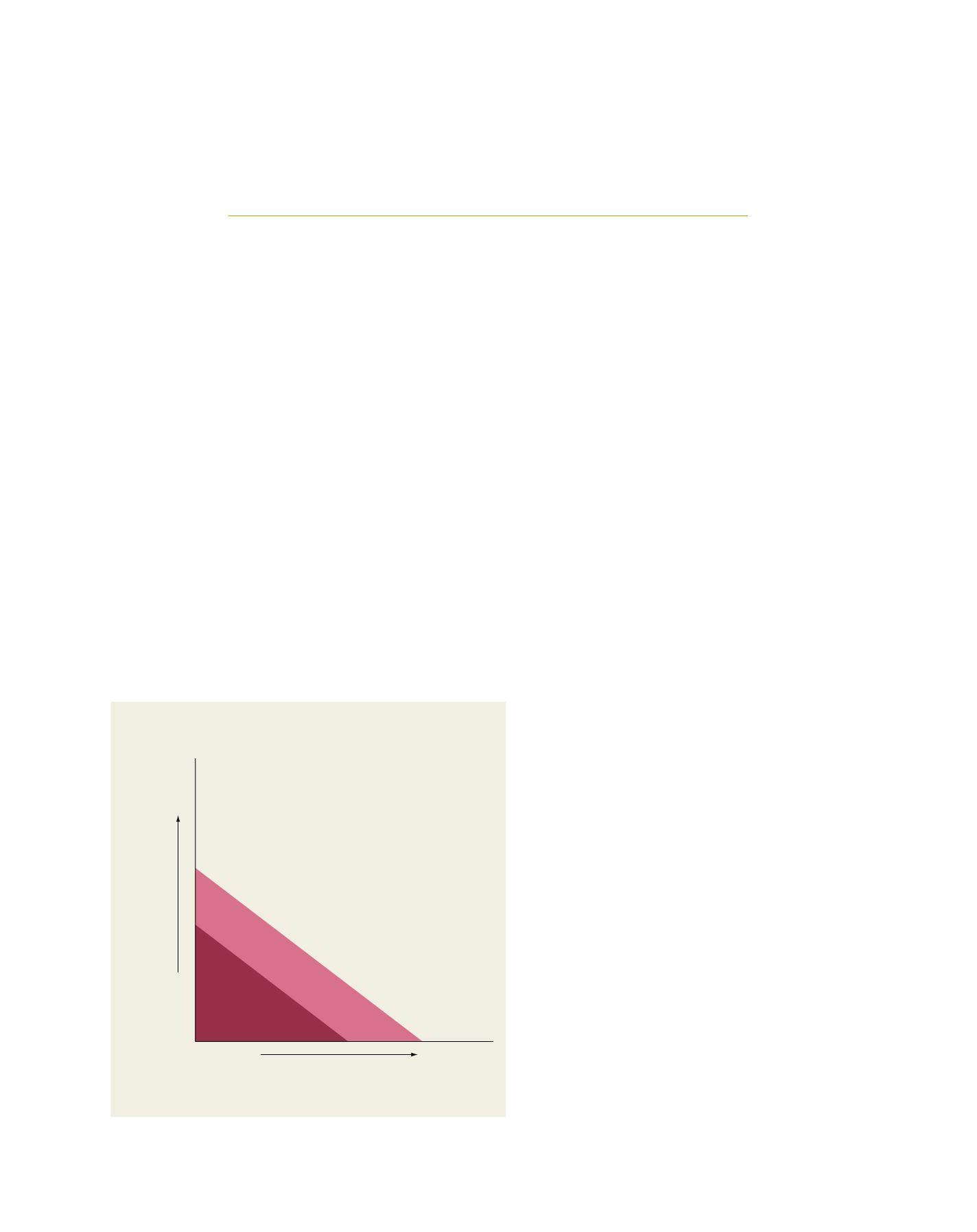
Level of importance to society of service
Development
Recovery
Critical
Non critical
Low
High
Scope – level of resilience, time and geographic scale,
integration with other sectors or cross-cutting issues
Emergency
Focus on DRR in the different emergency management cycle phases
Source: CARE