


 127 / 196

[
] 125
With this background, one of the first and most important
outcomes of the new strategy was the School Safety Law for the
reconstruction and strengthening of 257,945 vulnerable classes
(39 per cent of the total public classrooms in Iran), with a USD4
billion budget that was proposed and passed by Iran’s Parliament
in 2006.
This important legislation for the safety of the children of Iran was
passed following an IIEES initiative starting with the school educa-
tion programme in 1992 and continued by school safety
campaigners, in close cooperation with the Ministry of Education
and support from parliament. It should be noted that equal budget
has been allocated from the regular development fund for the
construction of new, safe school buildings. This shows the aware-
ness and concern of policy makers regarding earthquake safety in
Iran.
Since the start of the project, 2,158 schools have been recon-
structed, 2,193 are under reconstruction, and 2,500 schools with
30 per cent vulnerability are under the retrofitting process, with a
budget of around USD1.5 billion throughout the 30 provinces of
Iran. Of the 4,341 reconstructed schools, 3,321 were elementary
schools, 1,007 middle schools and 752 high schools. The highest
priority was given to the elementary schools with the most vulner-
able children, and to those in the provinces with more vulnerable
schools (mainly border provinces). The implementation of this
important programme along with the ongoing Earthquake Safety
Education programme, which has been in operation in Iranian
schools since 1994, would hopefully ensure the safety of the future
generations of Iran and consequently the sustainable development
of the country.
Conclusions
Seismic risk is much more than a simple shock. It is a
complex combination of the factors that determine the
potential for people to be exposed to this type of natural
hazard. Scientists, engineers, government officials and
the general public must all be involved in finding realis-
tic, achievable and appropriate ways of applying scientific
knowledge to everyday life. Only by working together
can we mitigate the impact of a natural hazards on
human life and society, and solve the earthquake puzzle.
A combination of factors has made visible progress
toward a seismically safe Iran. These include good
timing in the establishment of IIEES; the timely response
of IIEES to safety demands; the Iranian Government’s
decision to implement an earthquake hazard mitigation
programme following the Manjil earthquake, and excel-
lent cooperation among the scientific communities of
Iran. The undoubted success of Iran’s experience can be
easily applied to the developing countries.
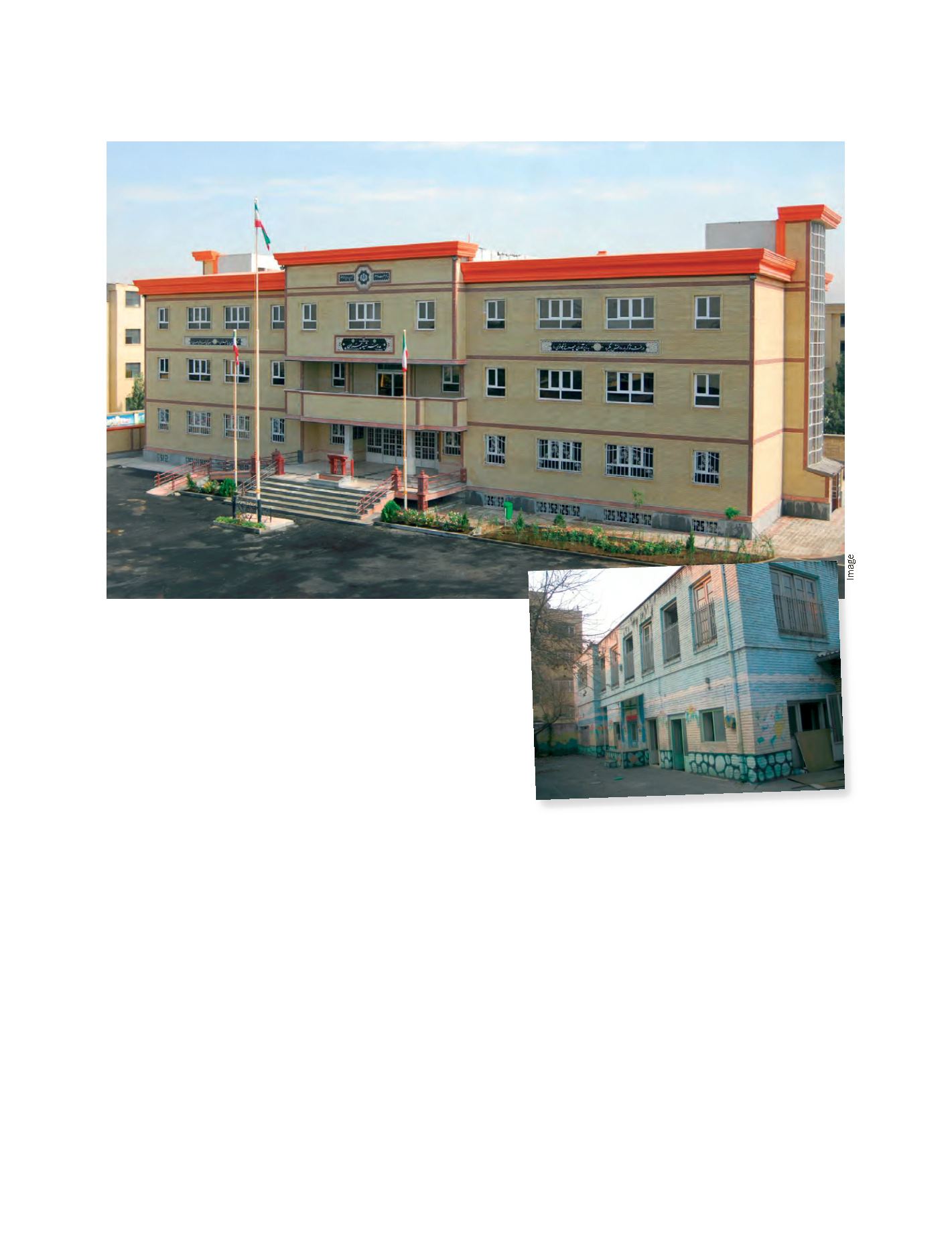
Budget has been allocated for the construction of new, safe school buildings
Image: Organization of School Renovation, Development and Mobilization of Iran Ministry of Education