



 146 / 218

[
] 144
projects, in advance. This system is a good example of
supporting sustainable development. The DIA system is
implemented centrally when the area of targeted development
is at least 300,000 square meters. For smaller development
projects, each city and province has introduced a local disas-
ter impact assessment system. DIA was introduced in 1996
and by 2001 the coverage had expanded to cover 48 admin-
istration plans and 47 development areas.
The Korean government is also focusing on disaster
preparedness during the summer season. To reduce the loss of
life, property damage, and economic hardship caused by
natural disasters, the “Disaster Preparedness Period” is desig-
nated from February to May. The E-30 emergency evacuation
system has also been implemented. This involves the complete
Source: KMA
1920-29
1930-39
1940-49
1950-59
1960-69
1970-79
1980-89
1990-99
9
10
11
12
mm/day
Precipitation Intensity
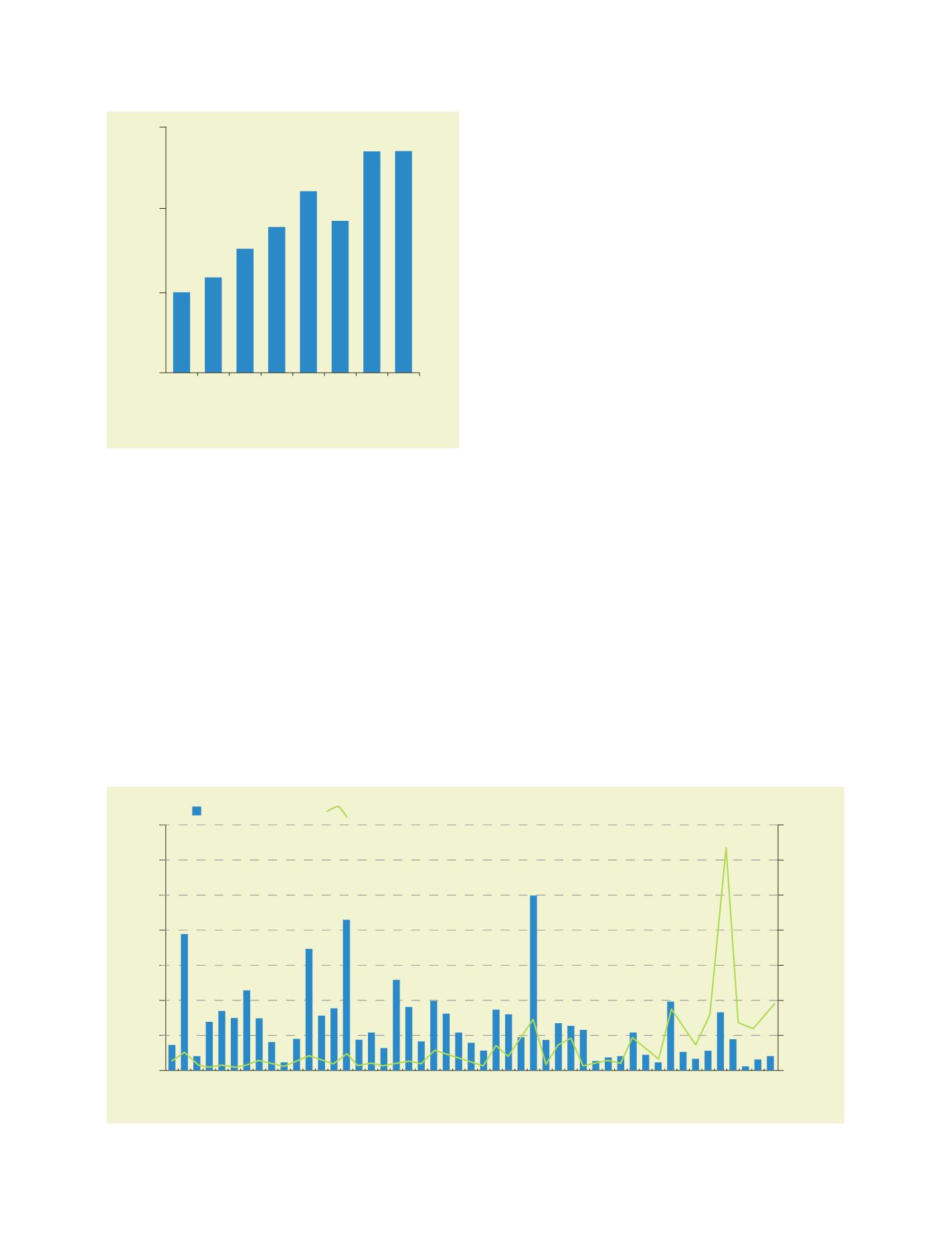
Precipitation intensity in the Korean Peninsula
0
200
400
600
800
1000
1200
1500
0
1000
2000
3000
4000
5000
6000
7000
Dead and missing
Property damage (US$ million)
Year
1958
1961
1964
1967
1970
1973
1976
1979
1982
1985
1988
1991
1994
1997
2000
2003
2006
Dead and missing
Property damage
Human loss and property damage by natural disasters in Korea from 1958 to 2006
Source: NEMA
evacuation of a disaster-prone area when a warning alarm is
triggered, and is designed to improve the safety of citizens.
Korea identified 787 sites susceptible to inundation, collapse,
and isolation by typhoons, floods, and landslides, and labelled
them as Disaster Prone Areas. A total of USD3.3 billion will be
invested for numerous improvements between 1998 and 2007.
In 2004 and 2005 USD822 million and USD169 million was
invested in 326 and 107 sites, respectively.
Since prompt and accurate information is so important for
protecting people’s lives and national infrastructures, a compre-
hensive network has been established connecting disaster
management agencies and disaster prevention facilities.
Equipment and various resources for rescue activities have
been secured, and emergency countermeasures against trans-
portation cut-off and isolation situations are in place.
From the use of conventional, commercial electronic display
boards to cutting-edge information technologies; six different
early warning systems are in place for natural disasters in
Korea. These include: CBS mobile phone message system, auto-
matic verbal notification system, automatic rainfall warning
system, disaster notification board system, TV disaster warning
broadcasting systems, and radio disaster warning broadcast-
ing system using radio data system (RDS).
Rehabilitation plans have been developed, and vulnerable
sites and structures have been strengthened in response to the
potential affects of climate change. This practice is important
because previous recovery plans simply restored the damaged
sites and facilities to their original status, thus leaving them
vulnerable to relapse.
Despite the various measures and systems developed to
counteract the emerging risks posed by climate change, the
recent disaster figures suggest that Korea will continue to pay
an increasing price. It is difficult to estimate the overall cost
to society, but it is clear that the negative effects of climate
change need to be studied and quantified as far as possible.
Such knowledge and understanding can then be applied in
disaster management systems that will mitigate the price of
climate change as far as possible.