


 153 / 210

[
] 151
A better work-life balance
for both fathers and mothers
Willem Adema
1
, Senior Economist, Social Policy Division, Organisation for Economic Cooperation and Development
E
nsuring
W
ork
-F
amily
B
alance
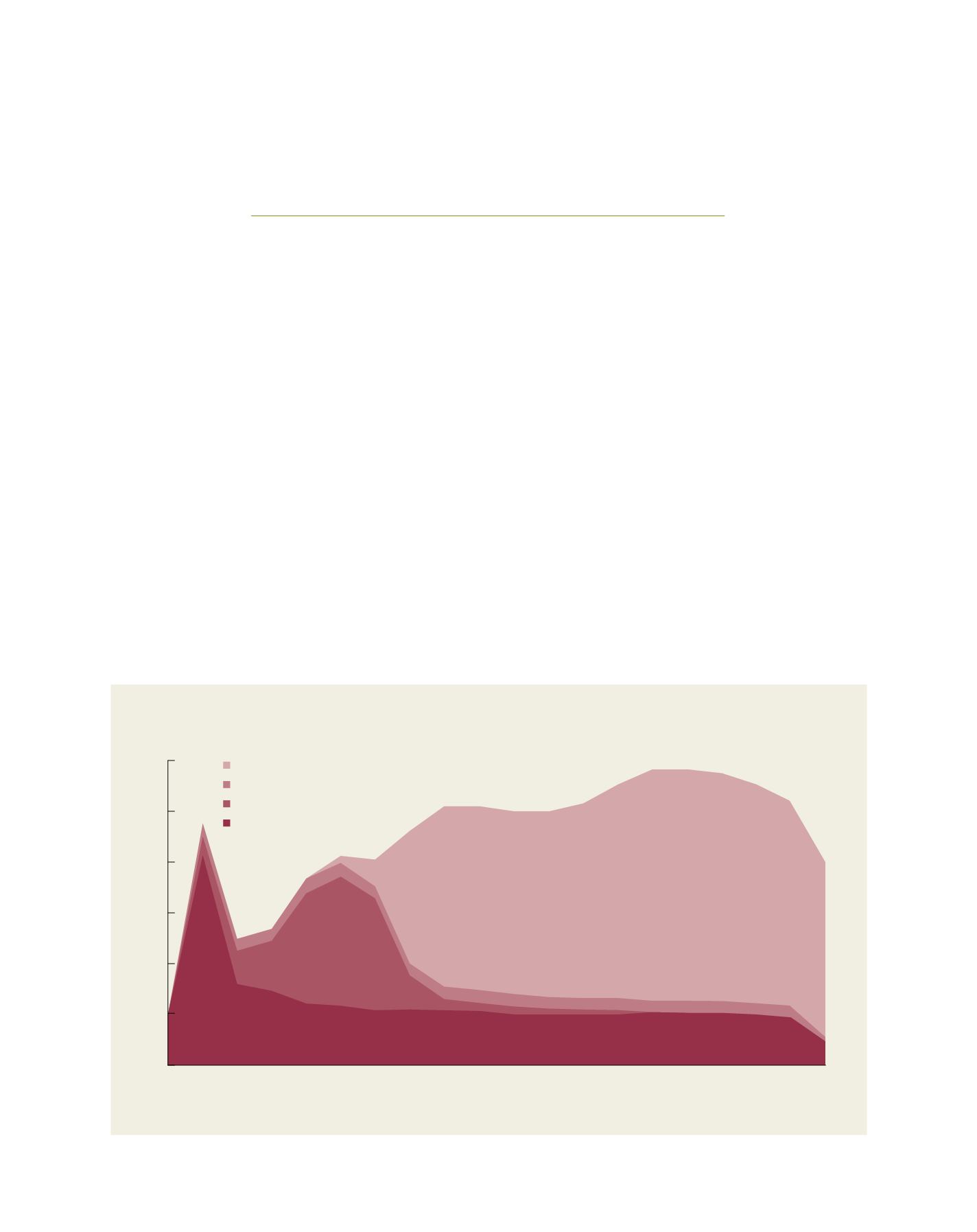
Public spending per child by age in US$ PPP (purchasing power parities)
Public investment in children increases as they grow up
Source: OECD (2014a), OECD Family database
F
amilies are the core of many social networks.
They provide identity, love, care, nurturing and
development to their members. As such, fami-
lies are a crucial engine of solidarity, redistributing
resources – in cash, in kind and in time – among indi-
viduals, households and generations, while providing
protection against economic loss and hardship. In all,
families are cornerstones of societies and economies.
Families are changing across the world with evolving norms,
educational opportunities and labour markets. Often both
parents work because the family has to make ends meet, but
also to pursue individual aspirations and careers. Increasingly,
women are better educated and female employment rates are
rising. Today, many fathers and mothers want to both partici-
pate in the labour market and have an active family life, while
children in couple families are more likely to have both parents
in work rather than just one.
Governments recognize the importance of families in society
and the avowed family policy objective in many countries is to
support families by providing parents with more choice in their
work and family decisions. However, family policy often has to
address a range of different – but interrelated – policy objec-
tives including promoting gender equality, combating family
and child poverty, promoting child development and enhancing
child well-being. The manner in which governments support
‘more choice for families’ varies considerably across countries,
and these differences are rooted in countries’ histories, economic
development, societal attitudes, the role of government, current
family and labour market outcomes, and the relative weight
given to the different underlying family policy objectives.
Investing early in children
Supporting children and their development is a public policy
concern across the world. Governments invest considerable
amounts in a range of child supports and education. In many
0
18
17
16
15
14
13
12
11
10
9 8 7 6 5 4 3 2 1 0
Prenatal
2,000
4,000
6,000
8,000
10,000
12,000
Other benefits in kind + Active Labour Market Programmes (ALMP)
Education
Childcare
Cash benefits and tax breaks