


 155 / 210

[
] 153
E
nsuring
W
ork
-F
amily
B
alance
to help improve household incomes of poor families. For
example, Mexico’s federal day-care programme for working
mothers, ‘Programa de Estancias Infantiles para Apoyar a
Madres Trabajadoras’ (Child-Keeping Programme to Help
Working Mothers), subsidizes community and home-based
day-care providers as well as low-income mothers who enrol
their children to facilitate the employment of these mothers.
3
The growing enrolment of children in childcare has
enhanced female employment on a full-time and part-time
basis.
4
And as many industrialized countries are ageing with
working-age populations that are stabilizing or diminish-
ing (such as Japan), helping parents in work will become
ever more important to many economies. For example, if
we assume that male and female labour force participation
rates remain as they were in 2010, then by 2030 the labour
force will decline by more than 10 per cent in the Czech
Republic, Germany, Japan, Poland, the Russian Federation,
the Slovak Republic and Slovenia.
Good quality childcare is not only important to female
employment and economic growth, it is also key to child
development. Some evidence suggests that mothers returning
to work before the child is six months old may have nega-
tive effects on child cognitive outcomes, particularly when
employment is on a full-time basis. The effects are, however,
small, not universally observed and, in certain circumstances,
balanced by positive effects related to having extra family
income. In addition, high-quality formal childcare is linked
with cognitive and developmental gains, particularly for chil-
dren frommore disadvantaged home environments.
5
However,
in many countries children in the lowest income groups are
least likely to participate in formal childcare services, which
highlights the important challenges for childcare policies of
ensuring access, affordability and quality.
The role of fathers
Gender employment gaps have been narrowing but paid work
gaps are widening. Across the OECD, female employment rates
are over 13 per cent below those of men, even though women
make up 70 per cent of all part-time workers. Many OECD
countries have introduced legislation that either grants part-time
work entitlements or gives employees the right to request flex-
ible working-time arrangements. These measures are generally
commendable, but they can have an unintended side effect. As
women much more than men tend to avail themselves of options
to reduce working hours or use parental leave, these policy meas-
ures can inadvertently deepen gender differences in employment.
Gender gaps feed into the decisions made by women about
work activities and intensities, about having children and home-
care options.
6
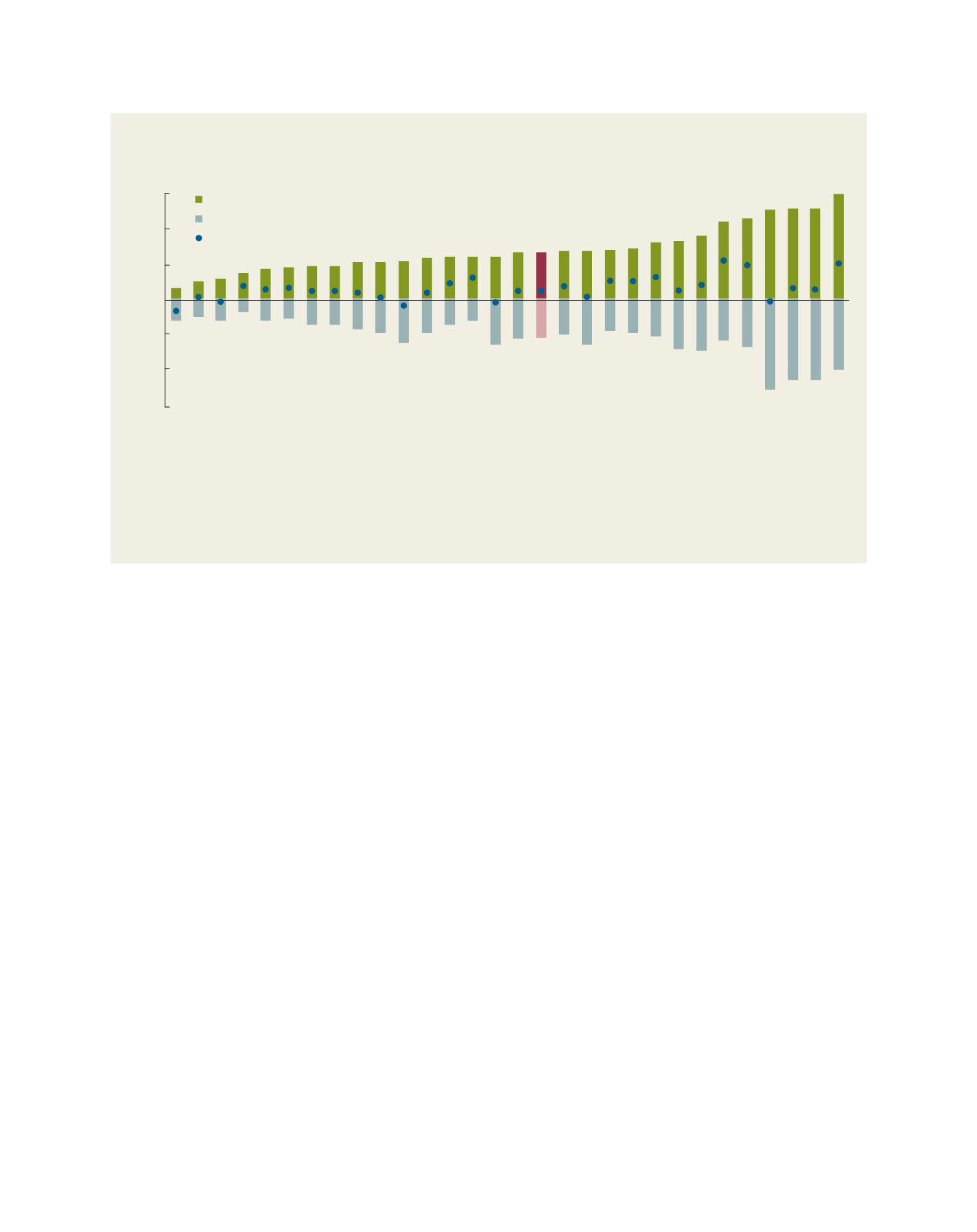
On average, women work two hours more per
day in unpaid work in and around home. Men spend more time
in paid work, but overall in most countries women spend more
time in paid and unpaid work than men.
7
Across countries,
mothers spend more time on educating, caring, playing and
cleaning for children, while fathers are more likely to limit their
involvement to learning and leisure activities. When mothers
enter employment, fathers could take on more of the cleaning
and caring responsibilities within families. In reality, shares
of housework and caring remain far from even, with mothers
doing more of both even when fathers are unemployed. Overall,
gender gaps in unpaid work are smallest in Scandinavian coun-
tries and rather large in Japan, Turkey, Mexico and India. This
has important implications as the countries where fathers
Time spent in unpaid, paid and total work, female minus male, in minutes per day
Women often spend more time working than men and do more unpaid work
Source: OECD (2014c), OECD Gender Data portal
Minutes
100
0
-100
Norway
Sweden
Denmarrk
Finland
United States
France
Canada
Belgium
Spain
Germany
Netherlands
United Kingdom
Estonia
Slovenia
New Zealand
Austria
OECD Average
Poland
Australia
Hungary
China
South Africa
Ireland
Korea
Italy
Portugal
Japan
Turkey
Mexico
India
300
200
-200
-300
Total work
Paid work
Unpaid work
Note: Countries are arranged from left to right in ascending order of the gender gap in unpaid work