


 160 / 210

universal welfare systems. It is becoming increasingly clear
that in order to sustain the European welfare or social model,
everybody – women and men – have to work. Women’s
entry to the labour market creates jobs in the areas of care
for children and other dependents as well as for consumer-
oriented services in general. Concerning part-time work,
which seems a great opportunity to balance the two spheres
of life, they would need to be good quality jobs as well,
meaning improved recognition, access to social security as
for full-time jobs, and enabling for career development. This
way part-time jobs and other flexible and innovative work
arrangements could contribute to gender equality and active
security for working families.
A more flexible, but at the same time secure labour market
could also better accommodate critical life course transitions.
Thus, it could reduce the probability of dropping out of the
workforce and losing out on income. These events can happen
to any family at any time.
In addition to workplace measures, families have a right to
affordable, accessible and quality care services, not only for
children, but also for elderly and disabled family members.
These services enable them to stay in the labour market, and
thus earn an income and build up social security and pension
rights. This is another aspect of the below-the-water structural
issues. Following the dual developments of higher female
labour market participation and the recognition of the rights
of the child, early childhood care and education services are
also at the top of the welfare reform agenda. There are differ-
ent opinions and cultural, historical and economic contexts
in different parts of Europe on this subject. But they converge
in the understanding that such available quality services
enable women to integrate or return to the labour market and
contribute to the physical, emotional and social and cognitive
development of the child. The devil, as usual, is in the detail
as to how this can be achieved with the current cuts to social
service spending. However, statistics show us that those coun-
tries with higher rates of female labour market participation
coupled with universal and quality childcare systems have the
highest fertility rates in Europe. This could serve as an inspira-
tion to other countries when they make their choices on what
services to finance, and how to better finance social services.
The discussion about early childcare provision cannot be totally
decoupled from the discussion about the leave system in any
given country, as the length and rate of payment for these leaves
(maternity, paternity and parental) will impact on the capabilities
of parents and families to make their own choices about child-
care and return to the labour market. Here, again, we are faced
with very different historical, cultural and organizational models.
However, generous leaves that are not too short, that have a rela-
tively high rate of financing, and that allow the family to choose
which parent takes the leave, seem to do the trick.
It is also important to stress that every family is different,
and every family has a different approach to work-life balance.
But as numerous studies and real life examples show, both
on the level of individuals (children and families) and on
broader levels (workforce, macroeconomic), when families
are empowered to make their own choices and are supported
in achieving work-life balance, the investment really pays off
for the family, and for society and the economy as a whole.
information and communications technology tools mean that
work has become increasingly mobile, and it is increasingly
difficult to draw boundaries between the work sphere and
the private or family sphere. In order to address these issues,
Volkswagen in Germany opted to switch off the Blackberry
server at the end of the working day. There are various inter-
esting and new private sector initiatives offered to employees,
such as laundry or ironing services, caring for ill children, and
help with employees’ household cleaning. These are usually
organized through a voucher system. The question, however,
is whether it really serves the interest of the employee and their
relationship to the employer, if the employer solves the employ-
ee’s private sphere issues during working hours. Wouldn’t it be
better if the employer would give workers the flexibility and
opportunities to deal with their personal challenges themselves,
away from the workplace?
There are also very heated discussions and split opinions
about employer-supported childcare, or company childcare.
IKEA has adapted the opening hours of its nurseries to the
working hours of its staff; children can attend from 6.30 a.m.
to – 9.30 p.m. Mondays to Saturdays, all year round. Some
companies offer baby-sitters who can be deployed within
the hour to pick up children from school in case the parents
are stuck in a meeting or on a delayed flight.
The economic reasoning of the Organisation for Economic
Cooperation and Development in its 2007 Babies and Bosses
study is that when parents cannot realize their aspirations
in work and family life, it isn’t only their well-being that
is impaired. Economic progress is also affected through
reduced labour supply and lower productivity, which ulti-
mately undermine the long-term fiscal sustainability of
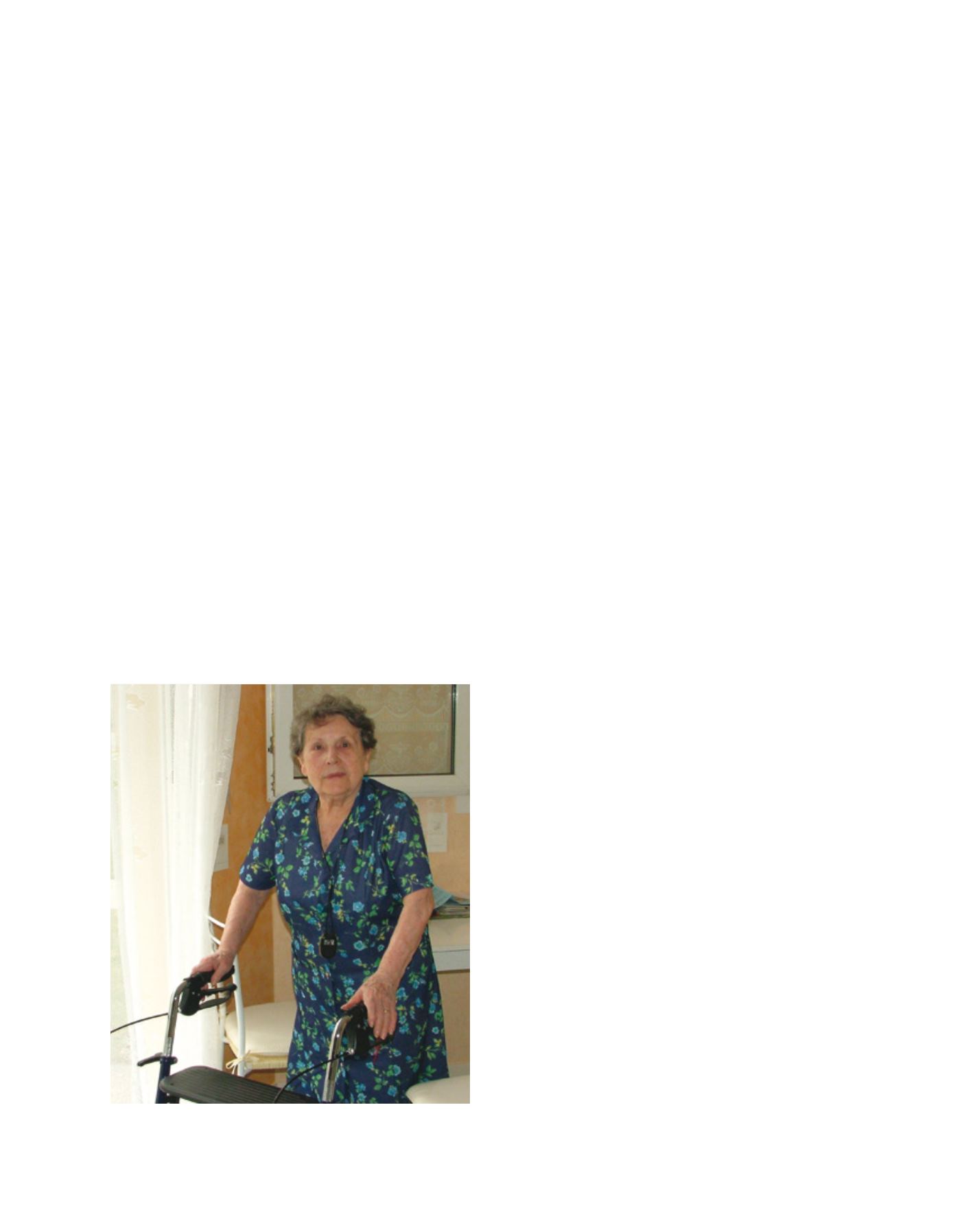
Families disperse as their members move away to find work, and many
ageing parents can no longer count on regular help from their own children
Image: Familles Rurales
[
] 158
E
nsuring
W
ork
-F
amily
B
alance