


 159 / 210

[
] 157
E
nsuring
W
ork
-F
amily
B
alance
and the United Kingdom have also imposed cuts that affected
families. The availability and affordability of quality public
services play a crucial role in enabling families to live the
life they want, make the choices they want, and ultimately
to find a good work-life balance. At the same time, however,
the private sector has its fingers on the pulse and employ-
ers are waking up to the reality of the demographic change.
They realize that to attract and retain qualified workers, they
must offer not only the right salary packages, but also meas-
ures to enable their employees to reconcile their work with
their family obligations.
With all these profound changes going on around us and in
our own homes, the twentieth anniversary of the International
Year of the Family is timely, as it will draw the much-needed
attention of policymakers and decision-makers, civil society
and the private sector to the most relevant issues families
are facing today. Through organizing exchanges and foster-
ing cooperation, 2014 will be an important year to take the
first steps towards understanding the challenges and working
out sustainable and innovative solutions. COFACE will place
the issue high on the EU agenda through our 2014 Year for
Reconciling Work and Family Life in Europe.
Now back to the iceberg: what are the structural changes
needed to enable families to better reconcile their work and
family life, and not only contribute to the better well-being
of individual family members, but also, as is proven, to
enhance productivity and contribute to a better functioning
society and economy?
Family policy, and thus reconciliation policies, can be
categorized in three distinct groups:
• time policies (working time, leave)
• resources (income, tax reduction, allowances)
• services (childcare, care of the elderly and disabled,
household services).
Currently, there is great discussion around the family-friendly
workplace. The number of working hours is a fundamental
factor in influencing the quality of life both inside and outside
work. The two keywords here are:
• flexibility – to manage both spheres of our lives (work
and private) according to the situation
• boundaries – setting the divide between the two spheres.
According to a recent study by the Families and Work
Institute, a large majority (87 per cent) of all employees report
that having the flexibility they need to manage work and
personal or family life would be ‘extremely’ or ‘very’ important
if they were looking for a new job. Yet one in five employ-
ees disagree ‘somewhat’ or ‘strongly’ that they now have the
schedule flexibility they need to manage the demands of their
work and personal lives.
It is clear that, in general, people feel that work disturbs their
home life more than their family responsibilities affect work
performance; this is the case for respondents in all countries
of the latest Eurofound European Quality of Life Survey. New
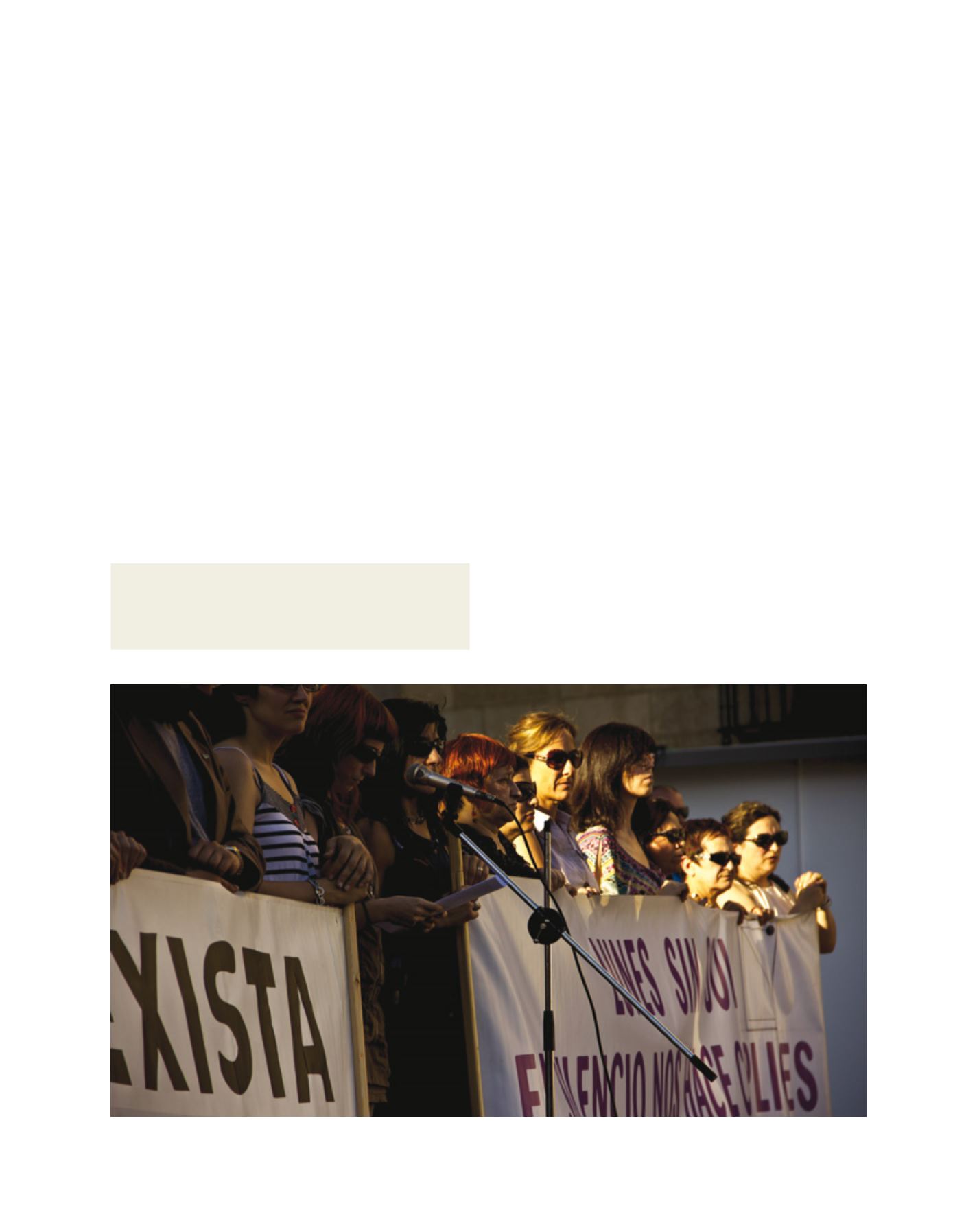
Empowering families to achieve a work-life balance can benefit the family, society and the economy
Image: FFM Isadora Duncan
The German initiative ‘Erfolgsfaktor Familie’ (Success-factor family)
brings together 4,500 companies that are family friendly, and has
a searchable database of best practices of these initiatives on its
website
www.erfolgsfaktor-familie.de