


 143 / 196

these tragic disasters, the Government of Bangladesh through the
Ministry of Food and Disaster Management, together with the
Bangladesh Red Crescent Society, developed the Cyclone
Preparedness Programme. Since 2003, the Comprehensive Disaster
Management Programme (CDMP) complements the Cyclone
Preparedness Programme, promoting community participation in
the construction and maintenance of cyclone shelters. In November
2006 the Bangladesh Meteorological Department, CDMP, the
Ministry of Food and Disaster Management and the Ministry of
Defence signed a Memorandum of Understanding to clarify roles
and responsibilities of each agency for early warning dissemina-
tion. A Disaster Management Information Centre has been initiated
under the Ministry of Food and Disaster Management, to archive
and disseminate meteorological, hydrological and climate infor-
mation and warnings provided by the Bangladesh Meteorological
Department, anticipate and assess damages, coordinate relief oper-
ations, and advise national planning processes so as to reduce
disaster risks. Bangladesh’s regulative framework for disaster
management, as updated in 2008, includes a Disaster Management
Act, defining mandatory obligations and responsibilities among
Ministries and agencies; a National Disaster Management Policy,
describing the national objectives, and strategies in disaster
management; a National Plan for Disaster Management 2007-2015,
complemented by hazard-specific management plans (flood,
cyclone, storm surge, tsunami, earthquake, drought, river erosion),
and Standing Orders on Disaster, detailing roles and responsibili-
ties of committees, ministries and other organizations in DRR and
emergency management.
On the operational levels, this programme involves a coordinated
approach to emergency preparedness and planning at national to
community levels, linking the early warning of tropical cyclones
issued by the Bangladesh Meteorological Agency (BMA) to an emer-
gency preparedness and response programme which
builds upon a network of 33,000 volunteers at the
community levels who assist with preparedness plan-
ning, drills, alert dissemination, evacuations, first aid,
relief, and ongoing community education and training.
A warning preparedness mechanism using a flag system
enables the linking of different levels of threat to appro-
priate actions to minimize the impacts. This
preparedness programme is complemented with the
development of concrete shelters raised on 12-foot
pillars to allow tidal surges to flow beneath, allowing
the population in the low-lying coastal region an effec-
tive evacuation mechanism. Furthermore, in 2006 the
system was further enhanced, with the setting up of the
Disaster Management Information Centre, which
archives and disseminates up-to-date weather, climate
and seismic observation data from the Bangladesh
Meteorological Department, anticipates and assesses
damages, coordinates relief operations, and advises
national planning processes so as to reduce disaster
risks. The benefits of this programme were realized in
November 2007 during the Cyclone Sidr, the equiva-
lent to a category four hurricane, when loss of life was
significantly reduced to 3,000. Following this event, the
assessments carried out in the region and with consid-
eration for potential increase in risks associated with
such hydrometrological hazards linked to climate
change, loss of life and economic losses in Bangladesh
could be further reduced through development of addi-
tional cyclone shelters in the low-lying areas and more
investments in infrastructure that could withstand the
powers of the cyclones and storm surges in this region.
[
] 141
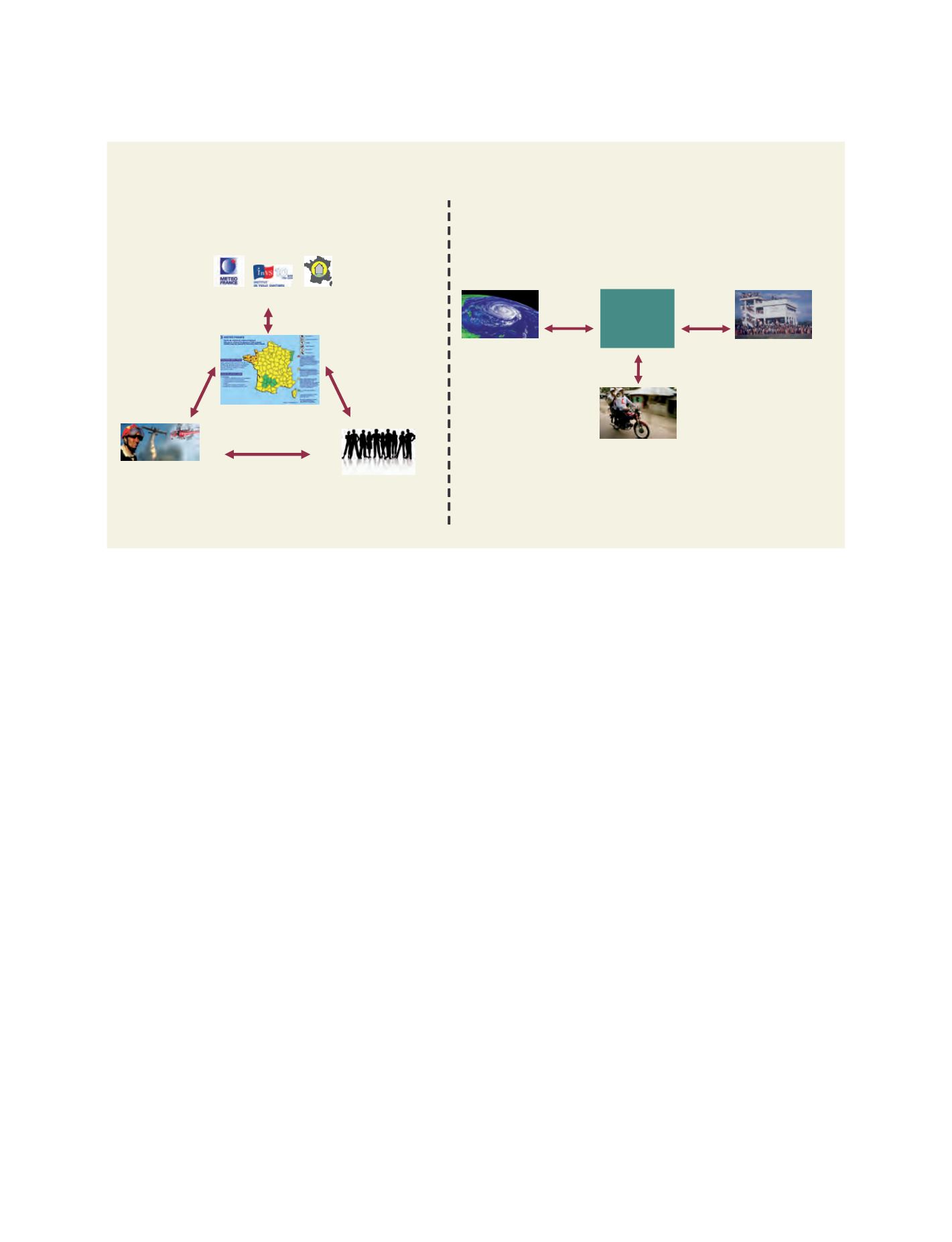
Two examples of good practices in early warning systems: France Vigilance System and
Bangladesh Comprehensive Disaster Management Programme
Shelters &
community preparedness
Dissemination:
networks
of volunteers
Meteorological
Department
Bangladesh Comprehensive
Disaster Management Programme
France Vigilance System
Coordination among technical agencies
Security services
& decision makers
General Public
Disaster
management
information
centre
Source: World Meteorological Organization