


 139 / 196

[
] 137
Saving lives through early warning
systems and emergency preparedness
Maryam Golnaraghi Ph.D, Chief; James Douris, Technical Officer and Jean-Baptiste Migraine,
Junior Professional Officer, Disaster Risk Reduction Division, World Meteorological Organization
E
very year disasters cause significant impacts around the
globe. Disasters caused by meteorological, hydrological
and climate-related hazards such as floods, tropical
cyclones, droughts and heat waves are the most frequent and
extensive geographically, resulting in the largest share of overall
impacts. Statistics from the Centre for Research on the
Epidemiology of Disasters (CRED) reveal that during the period
1980-2007, nearly 8,500 disasters caused by natural hazards
worldwide killed about two million people and resulted in losses
of USD1.5 trillion.
During this period, about 90 per cent of disasters caused by natural
hazards were of meteorological or hydrological origin, accounting
for 1.3 million losses of life and 1,200 trillion US dollars (respec-
tively 71 per cent and 78 per cent of overall impacts).
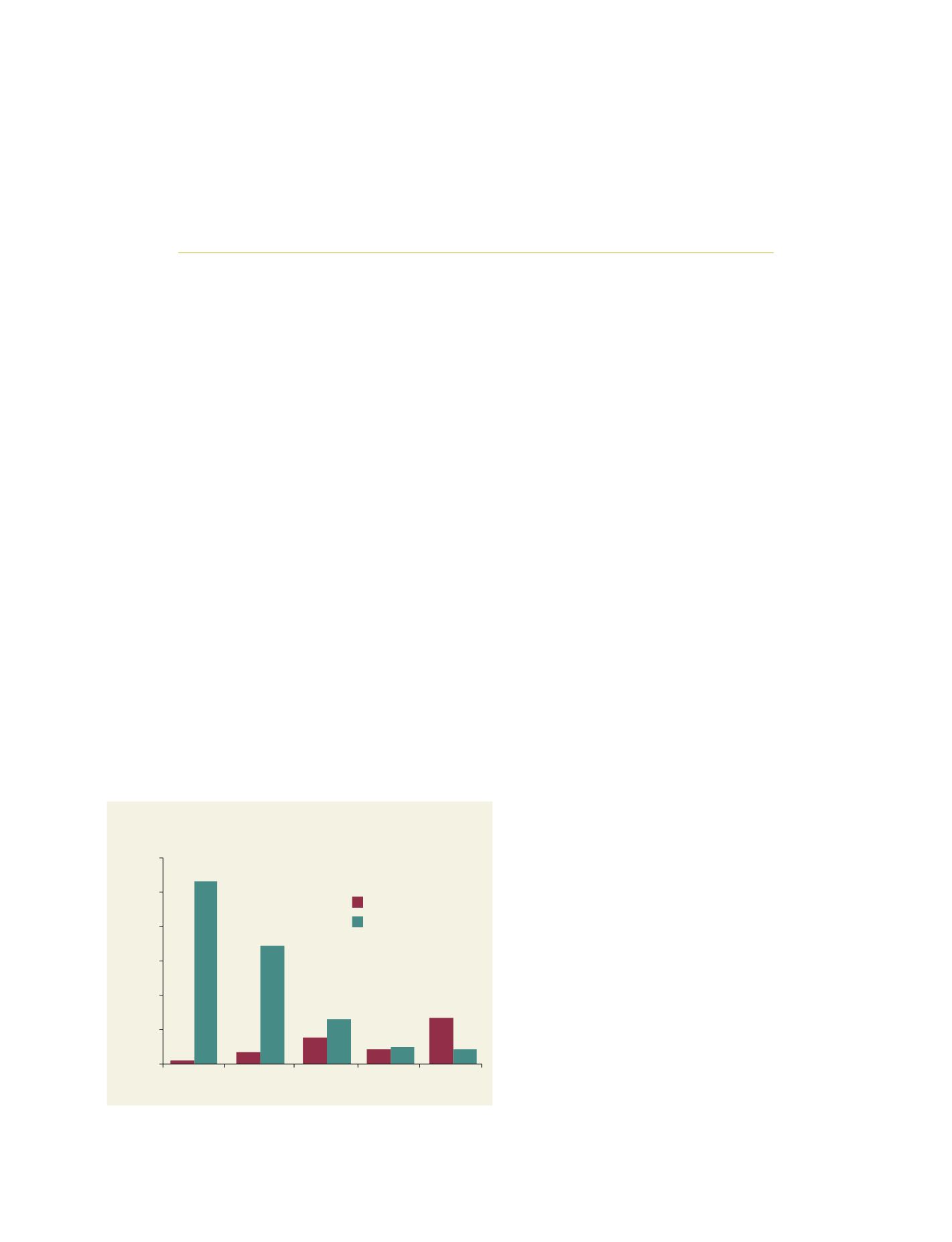
Over the last 50 years, globally, the recorded number of disasters
and their associated economic losses have increased by nearly 10-
fold and 50-fold, respectively. However, the associated loss of life has
decreased ten-fold. This reduction in loss of life is linked to the devel-
opment of effective disaster risk reduction (DRR) policies and
strategies, particularly related to linking early warning systems to
emergency preparedness and planning at national to local levels.
50 years of international cooperation to support
national capacities for early warning systems
Over the years, the World Meteorological Organization
(WMO), a specialized agency of the United Nations, has
acted as an authoritative voice for weather, water,
climate and disasters of hydrometeorological origin, and
has promoted the importance of prevention and
preparedness measures including risk assessment, early
warning systems and sectoral planning to reduce the
impacts of weather, climate and water-related hazards.
Through the coordinated networks of the National
Meteorological and Hydrological Services (NMHSs) of
its 188 members, WMO coordinates the networks of
Global Observing System, Global Telecommunication
System and Global Data Processing and Forecasting
System, providing a wide range of products and services
based on observations, monitoring, hazard analysis, fore-
casting to provide capacities to developing and least
developed countries for issuance of warnings.
One of the core activities of WMO has been the
consolidation of general requirements for global Earth
observations and the coordination of consistent, system-
atic and continuous collection and archiving of
hydrometeorological observations. Furthermore,
through establishment of standards, guidelines and
procedures for data collection, quality control, format-
ting, archiving and rescue, WMO has assisted countries,
through their NMHSs, to enhance their capacity in this
area. WMO continues to work towards ensuring consis-
tent data quality and accessibility across national
boundaries for the purpose of improving risk manage-
ment capabilities at the regional and subregional levels.
Through the WMO Global Observing System, oper-
ated by the National Meteorological Services, data are
collected from 17 satellites, hundreds of ocean buoys,
thousands of aircraft and ships and nearly 10,000 land-
based stations. More than 50,000 weather reports and
several thousand charts and digital products are dissem-
inated daily through the WMO Global
Telecommunication System, which interconnects all
countries through their National Meteorological Services
around the globe. The WMO Global Data Processing
and Forecasting System involves three World
Meteorological Centres (WMCs) and 40 Regional
0.05
2.66
0.17
1.73
0.39
0.65
0.22 0.25
0.67
0.22
0
0.5
1
1.5
2
2.5
3
56-65
66-75
76-85
86-95
96-05
Geological
Hydrometeorological
decade
casualties per decade (millions)
Decadal loss of life related to geological versus
hydrometeorological hazards
Source: EM-DAT: The OFDA/CRED International Disaster Database,
www.em-dat.net, Université Catholique de Louvain, Brussels, Belgium