


 140 / 196

[
] 138
levels of warning that are linked to levels of
preparedness, readiness and emergency operations
• Community-based emergency planning, prepared-
ness and training programmes to ensure effective
response to warnings to reduce the potential
impacts.
Development of capacities along these four components
would require political commitment and investments
for development of early warning systems and emer-
gency preparedness reflected in disaster risk
management plans and budgets, legislations that define
explicitly roles and responsibilities of various authorities
and agencies at national to local levels. Operational
implementation of warning systems would also require
a coordinated approach among different stakeholders
with clear protocols and procedures that enable effec-
tive coordination at national to community levels.
Furthermore, there is need for systematic feedback and
evaluation of the system at all levels following each
event, to ensure improvements over time.
International cooperation for strengthening
national early warning system capacities
While the benefits of early warning systems have been
demonstrated over the last decades, national policies in
many countries continue to stress post-disaster response
and relief operations. There remain significant defi-
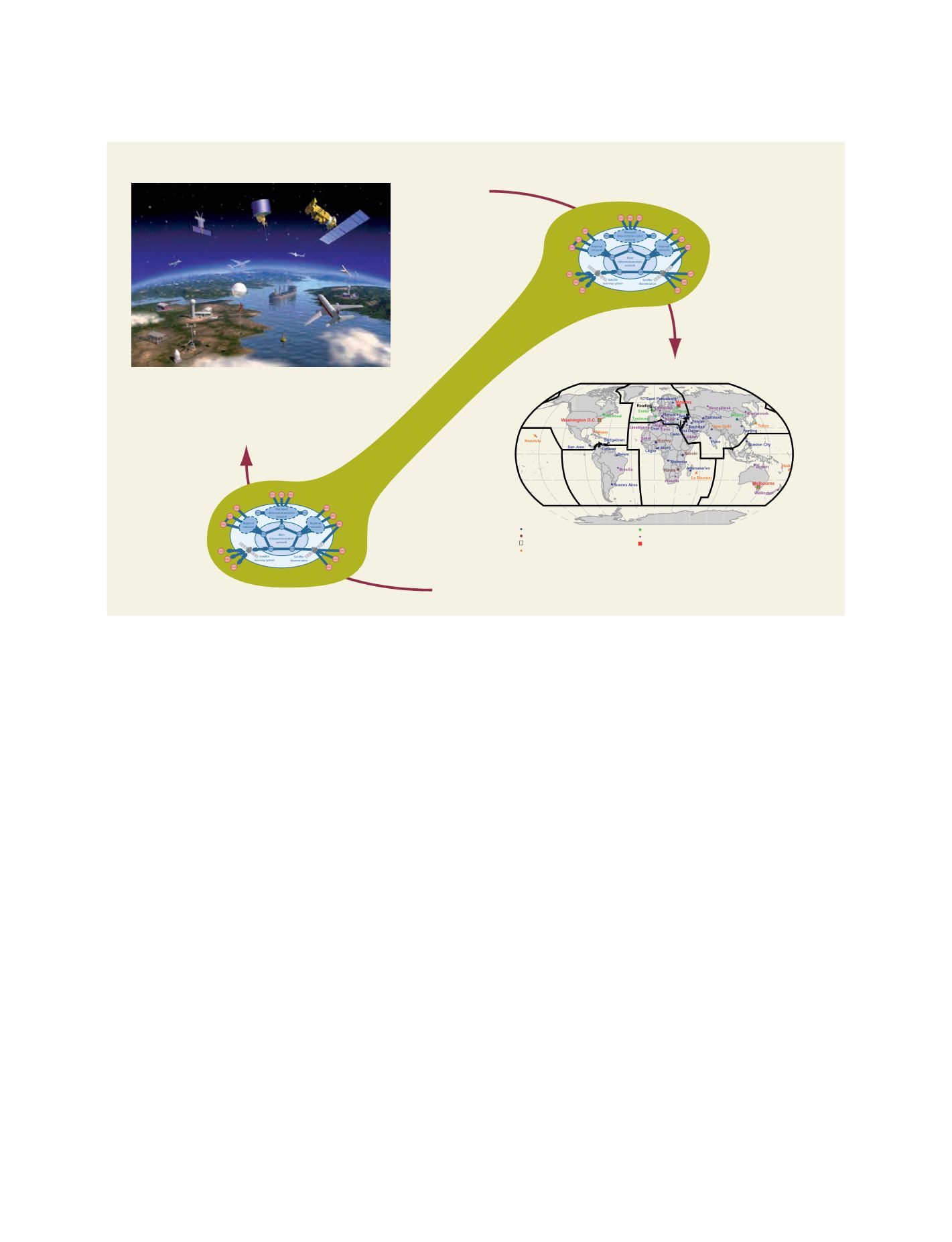
Specialized Meteorological Centres (RSMCs), as well as regional
climate and drought monitoring centres. These centres, which are
operated by NMHSs, ensure cooperation at global, regional and
national levels to process data and routinely provide countries with
analyses and meteorological forecasts, supporting early warning
capacities through their NMHSs. An example is the WMO Global
Tropical Cyclone Early Warning System. It comprises a coordinated
observing network for collecting and sharing data, six Regional
Specialized Meteorological Centers
1
providing tropical cyclone analy-
sis, forecasts and alerts to the National Meteorological Services and
five regional committees, which ensure ongoing improvements in
the tropical cyclone forecasting and operational coordination for the
upcoming season. This enables the availability of tropical cyclone
warning capacities in all countries at risk. WMO is working on an
integrated approach to ensure utilization of this coordinated network
to support national warning systems for a wide range of hazards
including floods, droughts, sand and dust storms, severe storms,
storm surges and other marine related hazards.
Components of effective early warning systems
Effective early warning systems involve four operational compo-
nents, including:
• Observing, detecting, monitoring and forecasting hazards, and
developing warning messages
• Assessing the potential risks and integrating risk information in
the warning messages
• Distributing, rapidly and reliably, understandable warnings to
authorities, risk managers and the population at risk, with
WMO coordinated global operational network in support of national early warning systems
Regional Meteorological Training Centres
Drought Monitoring Centres
Medium Range Forecasting Centre
Tropical Cyclone Forecasting Centres
Environment Emergency Response Centres
Regional Meteorological and Hydrological Specialised Centres
World Meteorological Centres
National Meteorological
and Hydrological Services
Global Data Processing and
Forecasting System
Global Telecommunication System
Meteorological,
hydrological
and climate
observations
Meteorological, hydrological and climate
value-added products and warning advisories
Source: World Meteorological Organization