


 141 / 196

[
] 139
ciencies in investments in systematic and sustainable early warning
systems and emergency preparedness programmes at the national to
community levels, posing urgency for the scientific and technical,
development and humanitarian community to work together to raise
political awareness on the benefits of early warning systems and
emergency preparedness and to assist countries in developing these
capacities.
The concept of early warning systems has received significant
international attention in the past few years.
2
Results of the Global
Survey of Early Warning Systems, commissioned by the Former UN
Secretary-General Kofi Annan, together with national and regional
capacity assessment surveys conducted by the WMO, indicate that
in many countries there is need for development of early warning
systems as an integral part of national DRR strategies.
The adoption of the Hyogo Declaration and
Hyogo Framework for
Action 2005-2015: Building the Resilience of Nations and Communities
to Disasters
(HFA) by 168 countries during the World Conference
on Disaster Reduction (January 2005, Kobe, Japan), marked the
beginning of a new era for disaster risk management, with the second
high priority area stressing the importance of ‘identifying, assessing
and monitoring disaster risks and enhancing early warnings.’
In May 2006, following the Third International Early Warning
Conference (Bonn, Germany), WMO convened the First
International Experts’ Symposium on Multi-Hazard Early Warning
Systems (Geneva, Switzerland, May 2006) (MHEWS-I), also co-spon-
sored by the World Bank, United Nations Development Programme
(UNDP), UN Office for the Coordination of Humanitarian Affairs
(OCHA), International Federation of Red Cross and Red Crescent
(IFRC), International Strategy for Disaster Risk
Reduction (ISDR) Secretariat and UNESCO, in which
nearly 100 experts from the networks of 20 technical,
humanitarian and development agencies participated.
The MHEWS-I:
• Provided recommendations pertaining to major
gaps in governance, organizational coordination
and operations aspects of early warning systems
along the four components of early warning
systems
• Identified criteria for good practices in early
warning systems
• Identified examples of good practices including the
France Vigilance System, Shanghai Multi-Hazard
Early Warning and Emergency Response
Programme, Bangladesh Cyclone Preparedness
Programme, and Cuba Cyclone Preparedness and
Response System
• Recommended the need for strengthened coordina-
tion and collaboration among agencies across
components of early warning systems.
3
Since 2007 WMO, through an integrated planning
approach with other partner humanitarian and devel-
opment agencies (e.g. IFRC, World Bank, OCHA) and
regional agencies, has been initiating national demon-
stration and pilot projects to develop, analyse and
document good practices in early warning systems. In
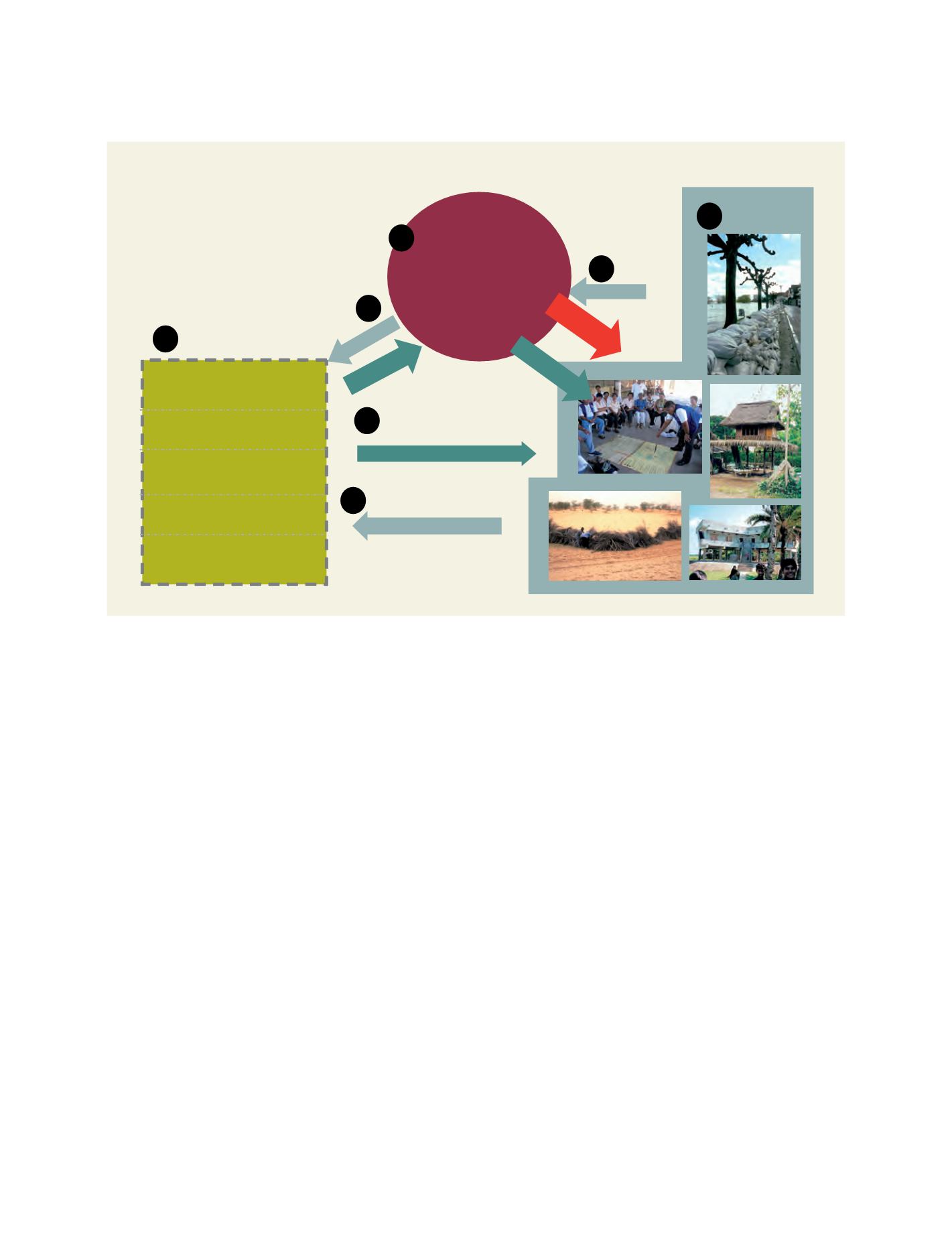
Criteria for effective early warning systems
Meteorological
Hydrological
Geological
Marine
Health (etc.)
Coordination among
National Services
feedback
feedback
Community
Preparedness
risk warning
National to local
governments
supported by
DRR plans, legislation
and coordination
mechanisms
risk warning
feedback
risk warning
preventive
actions
1
2
3
4
5
5
5
Communication and
Dissemination
Source: International Experts’ Symposium on Early Warning Systems for Integrated Disaster Risk Management, May 2006