


 134 / 196

[
] 132
Auditing school safety in India: lessons for Asia
Vishal Pathak and Sanchit Oza, All India Disaster Mitigation Institute
U
nsafe schools are a reality in India. With the spread of
education, more and more children go to schools that are
vulnerable to fire, floods, earthquakes, cyclones, pollu-
tion, food poisoning, stampede and so on. At repeated great cost,
this has been seen many times in the last decade. Despite the
opportunity of using schools as safe facilities for public shelter
following disasters, school buildings are an additional liability,
and the worst place to concentrate our children. It is a wonder
that there is growing national demand for electricity, clean air,
and safe water, but not for safer schools. Appreciating risk is a
well-developed skill among India’s growing retinue of investors
and businesses including the insurance sector. Yet such risks
relate to near-term issues – such as returns on stocks and
mutual funds – and are not connected well enough with a crit-
ical lifelong investment: the safety of our own children in their
schools. Indian children remain exposed to risks in schools. This
paper highlights the experiences and lessons of the All India
Disaster Mitigation Institute (AIDMI) and its partners, and the
results of a recent school safety audit in India intended to help
practitioners and policy makers in Asia.
Context
In recent years, India’s schools have sustained many catastrophic inci-
dents: a fire led to the deaths of over 400 people – about half of them
students – at a school’s prize-giving ceremony in Haryana in 1995; the
Bhuj earthquake caused the deaths of 971 students, more than 400 in a
single incident and 31 teachers, in Gujarat in 2001; a fire at the Lord
Krishna School in Kumbhakonam, Tamil Nadu took the
lives of 94 children in 2004; thousands of students and
teachers were killed, injured or otherwise affected in the
2004 South Asia tsunami; in the 2005 earthquake in
Kashmir, more than 17,000 children in India and Pakistan
were crushed to death under their school buildings, and
15 children and three teachers died in a boat accident
during a school picnic at Kerala in 2007. These are a few
tragic examples of disasters that pose a regular threat to
students and teachers.
One of the Millennium Development Goals (MDG) is
to enrol all children worldwide in school by 2015. With
a large percentage of the Indian population living in
poverty (36 per cent living below the official poverty line)
and with a literacy rate of just over 50 per cent, it is imper-
ative for the future development of India that children
have access to education. Over 78 million children are
currently in need of schooling. To meet this great demand,
many schools are overburdened and compromise on
safety.
1
The Government of India’s District Primary
Education Programme (DPEP) and Sarva Shiksha
Abhiyan (SSA), which aim to achieve universal primary
education by 2010, have yet to focus on school safety. The
National Common Minimum Programme (NCMP) of the
Government of India also puts direct and full emphasis on
“providing universal access to quality basic education.”
However, unsafe schools adversely affect the quality of
education in poor and low-income areas. Further, chil-
dren have a right to education, but their right to safer
schools is not recognized or even articulated.
In general, awareness of school safety issues is rising
and is reflected in key global initiatives such as the
global campaign on ‘Disaster reduction begins at school’
2
launched by UNISDR in 2006 and the work of the
Coalition for Global School Safety (COGSS) and its part-
ners worldwide.
3
However, a lot remains to be achieved.
Child’s Right to Safer School campaign
AIDMI began working informally with school safety
issues at its inception in 1989, and later consolidated
and organized this important work as the Child’s Right
to Safer Schools campaign in response to the 2001 earth-
quake in Gujarat. The campaign aims to reduce
hazard-induced losses in schools by increasing aware-
ness, developing school-specific disaster preparedness
plans, promoting structural and non-structural safety
measures and insuring school children, teachers and
administrators against accidents of any kind. The
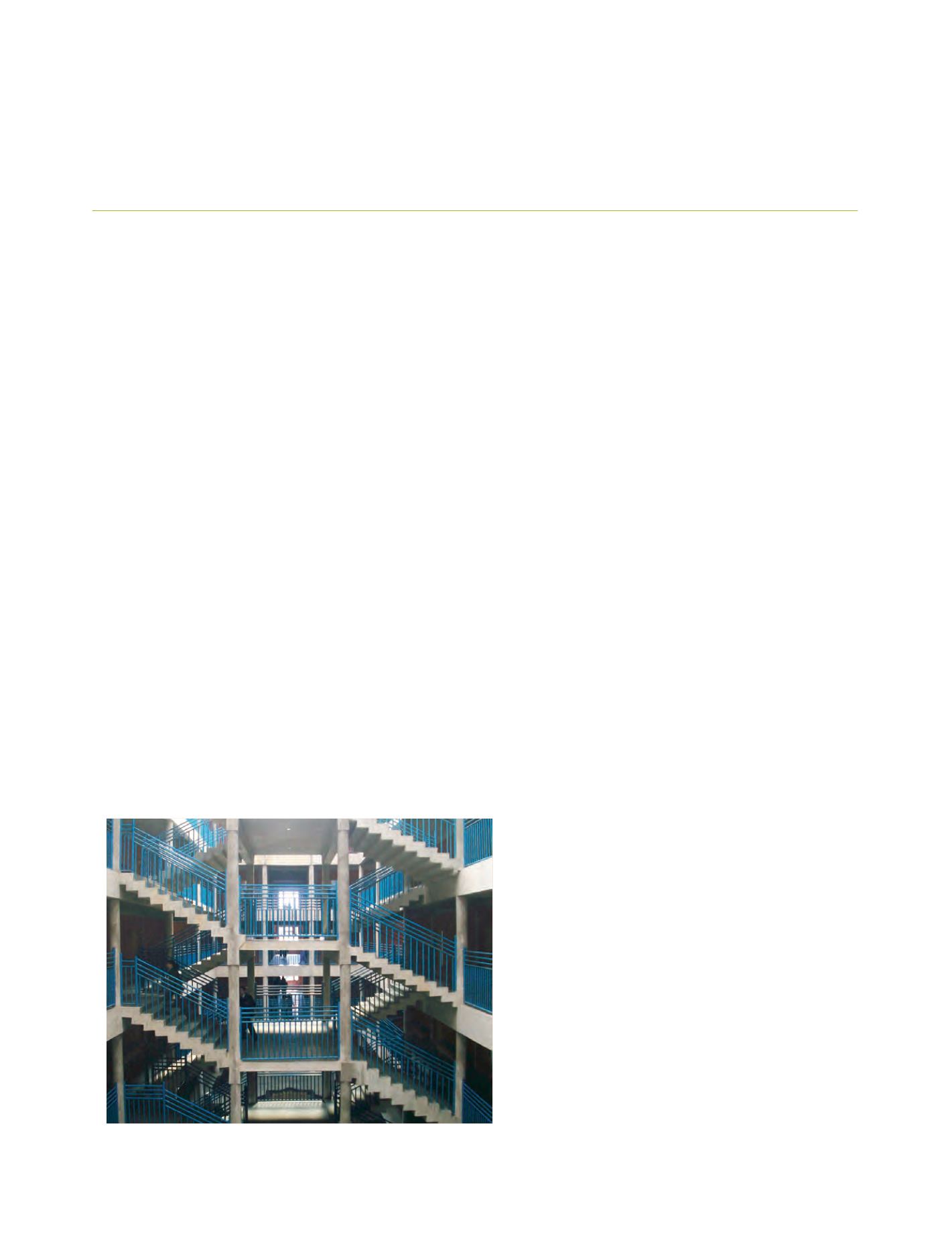
A school-specific safety audit can be a first step toward making schools safer
Image: AIDMI. School Safety Audit 2008