



 30 / 218

[
] 30
E
VERY DAY
,
THE
life and the economic prosperity of
millions of people throughout the world depend on the
decisions taken in various countries on the basis of avail-
able hydrometeorological information and generalized analysis
of the climate. This indisputable fact, which is borne out by a
multitude of research, shows the important role of National
Hydrometeorological Services (NHMS) in the sustainable
development of the economy and of society as a whole.
This is particularly apparent in cases where adverse weather
conditions and hazardous hydrometeorological conditions
affect the population and economy. As research and experience
have shown, this effect is often considerable.
According to data from the World Conference on Natural
Disaster Reduction (Yokohama, 1994) the number of disasters
that caused a high level of economic damage (on a scale of
more than 1 per cent of the annual gross domestic product of
the country in which they occurred) rose 4.1 times globally
between 1984 and 1994. The number of victims rose 3.5 times,
and the number of deaths 2.1 times. Over the past 25 years,
natural disasters have claimed more than 3 million lives, 90
per cent of which were in developing countries.
Over the past decade, even more hazardous manifestations
of weather and climate change have been noted. Thus, in 2002,
the annual report of the Munich Reinsurance Company stated
that between 1991 and 2001, the number of significant natural
disasters increased 2.6 times in comparison with the 1960s.
This led to an increase in economic losses of 7.3 times.
According to the available statistical information, between
1994 and 2004 natural disasters caused more than 730 billion
dollars worth of damage and affected 1.1 billion people.
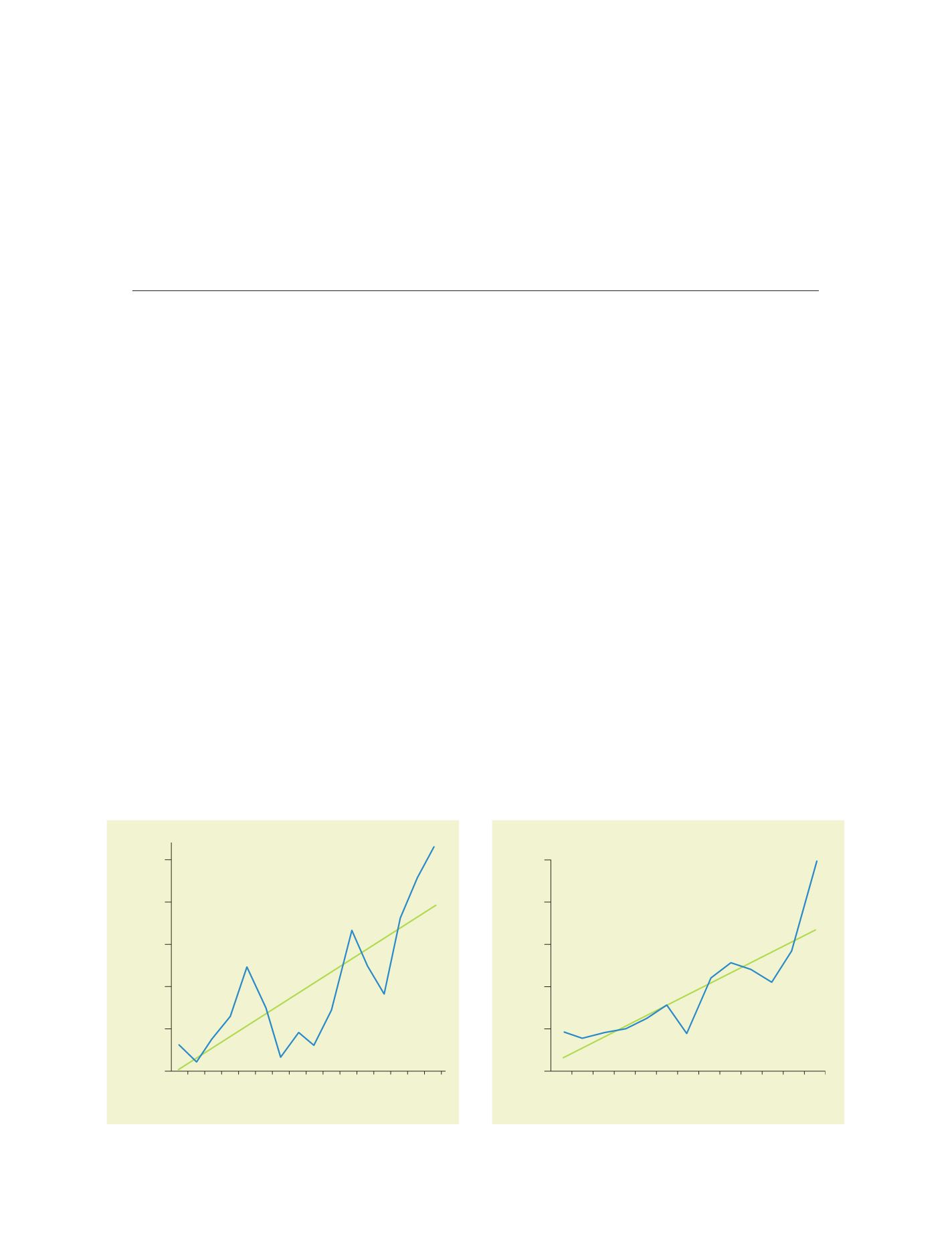
The same trend can be seen in Russia: the graph below shows
the distribution of the total cases of adverse weather conditions
and hazardous hydrometeorological conditions that caused
social and economic damage between 1991 and 2006.
Furthermore, the concentration of hazardous weather that grips
individual regions of Russia (for example, the North Caucasus
region, Chita Oblast, Altai Krai, Kemerovo Oblast) is a cause
for particular alarm. Other countries face the same situation.
The climatic and meteorological vulnerability
of the population and economy of Russia as a
factor in safe and sustainable development
A.I. Bedritsky, Head of the Federal Service for
Hydrometeorology and Environmental Monitoring (Roshydromet); President, WMO
1991
1992
1993
1994
1995
1996
1997
1998
1999
2000
2001
2002
2003
2004
2005
2006
130
180
230
280
330
380
Number of cases
Distribution of cases of adverse weather conditions and hazardous
hydrometeorological conditions that caused social and economic
damage in Russia between 1991 and 2006
1991
1992
1993
1994
1995
1996
1997
1998
1999
2000
2001
2002
2003
5
10
15
20
25
30
Economic loss (billion roubles)
Economic losses (in billion roubles) in the agricultural sector
owing to the effect of hazardous hydrometeorological
phenomena and adverse weather conditions
Source: A. I. Bedritsky
Source: A. I. Bedritsky