



 89 / 156

[
] 89
benefit analysis is to be commissioned to identify the most appro-
priate technology to be used in future interventions.
Flood shelters
– The requirements and standards for the use of
flood shelters during disasters need to be assessed, particularly in
relation to the use of their facilities, such as water and sanitation.
Agriculture cropping patterns
– The reliance upon a single rice
crop is contributing to the vulnerability of the communities. The
use of short maturation rice varieties that will be ready for harvest-
ing earlier in the dry season and lessen the exposure of the crop
to flash floods is to be explored. Additionally, Concern will explore
with the communities the possibilities for crop diversification
including winter vegetables and spices.
Tree plantations
– Two local tree varieties
(koroch – Pongamia
pinnata
and
hijol – Barringtonia acutangula)
were originally chosen
as being suitable for the area and, though slow-growing, served
their function reasonably well as a protective measure against
wave erosion. In the light of experience in Bangladesh and else-
where, it was decided to review the appropriateness of other
species for the area that are multi-purpose, for example provid-
ing poles, firewood and animal fodder, and that have faster growth
rates and good soil protection properties.
Preparedness activities
Capacity building
– Concern, working with relevant government
bodies, will facilitate the reactivation and capacity building of local
disaster management committees in raising awareness of their
roles and responsibilities. The organization will also assist in the
preparation of risk reduction plans and their subsequent imple-
mentation. These include the preparation of contingency plans
for severe disasters such as search and rescue and the pre-identi-
fication of safe areas within and adjacent to the haor communities.
Emergency response
– Despite DRR becoming more central to
development planning over the past few years, there is evidence
to suggest that there will be a higher incidence of disasters in the
future. Concern will continue to strengthen communities, local
NGOs and government bodies to make speedy and appropriate
emergency responses when communities’ capacities are over-
whelmed. The purpose of these interventions will be primarily to
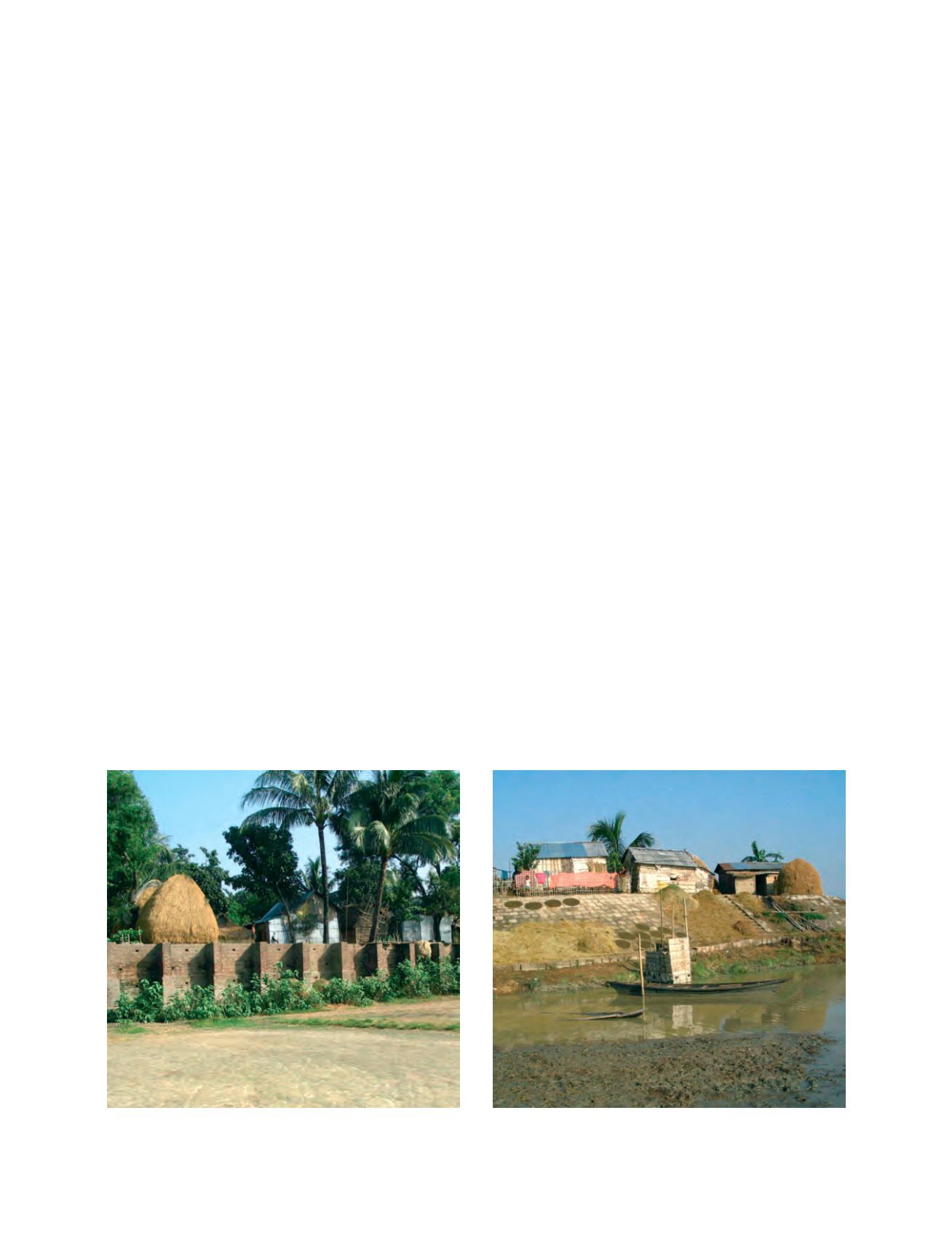
Brick walls introduced by Concern to protect soil from erosion
during floods have proved very effective
Photo: Pankaj Kumar
Concrete blocks have been introduced as a flood protection
measure by local government authorities
Photo: Pankaj Kumar
alleviate suffering and save lives by meeting immediate short-term
needs for food, shelter, health, water and sanitation. Concern has
initiated a programme with its own staff and its partners to
develop a common understanding of the principal codes and stan-
dards that inform good humanitarian programming. Central to
this is the need for a strong emergency response capacity allied
with transparency in targeting and accountability both to affected
communities and donors.
Concern Bangladesh has demonstrated over the past years that
there is sufficient capacity between the programme team and part-
ners to achieve appropriate and timely responses to disasters. If
required, this capacity can be augmented by additional emer-
gency support that exists within the organisation.
Early warning systems
– It is widely recognized that early warning
systems have played a crucial role in reducing the impact of hazards
on communities. Bangladesh has an existing early warning system
in place that can give 72 hours’ warning of flash floods, but these
warnings are not well communicated to vulnerable communities
and do not always allow sufficient time for appropriate action to be
taken. Concern will help develop the linkages between this higher
level warning system and communities potentially at risk, and will
support the establishment of a haor community-based flash flood
warning system that will give up to six days’ warning, allowing the
safeguarding of harvests, livestock and other assets.
Advocacy issues
The risk assessment carried out during 2005 identified a wide
range of advocacy issues, including the early allocation of govern-
ment funds for risk reduction, standard relief packages,
strengthening of embankments prior to floods, river dredging, and
the establishment of specific building regulations for haor areas.
These and other issues will be prioritized by disaster manage-
ment committees through the process of micro-to-macro linkages
and by association with the national Comprehensive Disaster
Management Programme, existing national networks and coor-
dination groups. Concern will facilitate the development of a
concerted and broad-based strategy for advocating these issues
on both local and national levels.