



 107 / 208

[
] 107
The Farmer Communication
Programme in East Africa
David Amudavi and Hudson Wereh, Biovision Farmer Communication Programme
J
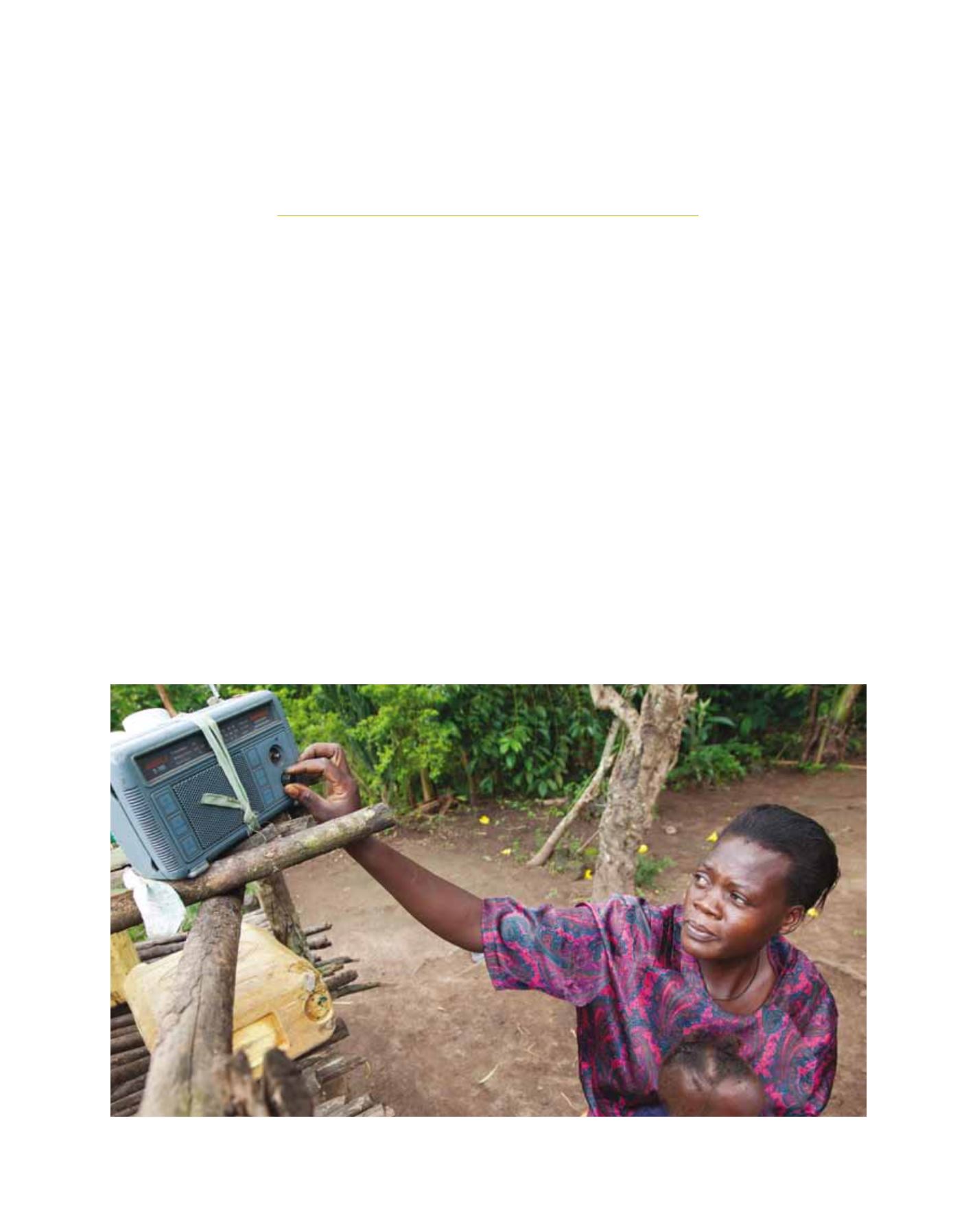
ohn Cheburet, a radio producer in Nairobi, receives and
responds to various questions after his radio broadcast show;
questions like: “What can I do to get rid of pests in my maize
field?” or “What can I do during the current drought?” John
has a particular focus on producing a farmers’ radio show where
he shares hands-on knowledge about ecological agriculture.
Given the urgency of the farmers’ need to do something about the
pests in their maize fields or the encroaching drought, short message
service (SMS) texts are used to respond immediately. “This has
become feasible due to the spread of mobile phones in Africa,” says
John. Moreover, using new media such as Facebook and other social
media tools brings dynamism into farming, making it attractive to
younger generations.
The radio programme is part of the Biovision Farmer
Communication Programme (FCP)
1
which supports national exten-
sion service systems to allow small-scale farmers to reap the benefits
of accessing good quality information at the right time.
The East African agricultural sector faces various
challenges, the main one being farmers’ lack of access
to reliable agricultural information. As such, low and
declining agricultural productivity has continued to
affect household incomes and worsen the food and
nutrition security of most rural farm families, partic-
ularly in East Africa but also in Africa as a whole.
2
Farmers are increasingly expressing demand for infor-
mation throughout the agricultural value chain, from
production to processing, value addition and marketing.
Such information is considered essential for agricultural
and rural development. Also, in response to exist-
ing and emerging challenges such as poverty and the
impacts of climate change, the need exists to increase
the farmers’ knowledge base through an integrated
approach utilizing relevant information and communi-
cation technologies (ICT).
3
The focus is well placed, as
evidence by a United Nations report has demonstrated
S
ustainable
agriculture
,
wildlife
,
food
security
,
consumption
and
production
patterns
Farmers’ radio shows enable sharing of knowledge about ecological agriculture
Image: ©Peter Luethi